

Religious Education
St Catherine’s RE Curriculum
The St. Catherine’s RE syllabus fulfils the expectations set out in the Religious Education Curriculum Directory (RED) for Catholic schools (Bishops’ Conference of England and Wales, 2023). The school has fully embraced the call of the Bishops’ Conference and the Diocese of Westminster to implement the new curriculum. Early Years Foundation Stage, Key Stage 1 and Key Stage 2 have all been teaching from the new directory since September 2025, a whole year earlier than the statutory requirement of full implementation by 2026.
Aims, Rationale and Compliance
The RED’s model curriculum, including the age-related end of unit expectations, is used as the basis for RE teaching and learning across the school. Supplementary planning resources and materials are provided by The Vine and the Branches scheme of work. Religious education is the core of the core curriculum and is the source and summit of the whole curriculum. RE has the same academic and systematic demands and rigour as all other subjects in the primary curriculum. Religious education is delivered within a broad and balanced curriculum, where it also informs every other subject. Across every year group, RE lessons are at least 10% of the timetabled school week, excluding prayer and acts of worship.
The call to make ‘Christ known to all people’ (Christ at the Centre, 2012, p.7) is at the centre of RE teaching within the school. Teachers and leaders acknowledge that engaging and challenging RE lessons are a core component of each child’s faith formation and spiritual journey. They explicitly understand their role in inviting every child to encounter the Saviour Jesus Christ. This occurs by deepening their religious knowledge, particularly of the Gospels, and by helping them to develop their role as disciples of Christ who calls them into life in all its fullness (Jn 10:10).
Religious Education at St. Catherine’s adheres to the following aims:
- to engage in a systematic study of the mystery of God, of the life and teaching of Jesus Christ,
- to share the teachings of the Church, the central beliefs that Catholics hold, the basis for them and the relationship between faith and life;
- to enable pupils continually to deepen their religious and theological understanding and be able to communicate this effectively;
- to present an authentic vision of the Church’s moral and social teaching to provide pupils with a sure guide for living and the tools to critically engage with contemporary culture and society;
- to give pupils an understanding of the religions and worldviews present in the world today and the skills to engage in respectful and fruitful dialogue with those whose worldviews differ from their own;
- to develop the critical faculties of pupils so to bring clarity to the relationship between faith and life, and between faith and culture;
- to stimulate pupils’ imagination and provoke a desire for personal meaning as revealed in the truth of the Catholic faith;
- to enable pupils to relate the knowledge gained through religious education to their understanding of other subjects in the curriculum.
Curriculum Structure
Knowledge lenses set out the object of study for pupils; they indicate what should be known by the end of each age-phase. They divide the curriculum into four systematic subsections for the study of Catholicism and two additional lenses for the study of religions and worldviews: hear, believe, celebrate, and live (the study of the Catholic religion), dialogue, and encounter (the study of other religions and worldviews).
Ways of knowing set out the skills that pupils should be developing as they progress through their curriculum journey. They are an evolution of the Age-related Standards in Religious Education. The three ways of knowing are: understand, discern, and respond.
Expected outcomes are a synthesis of the content outlined in the knowledge lenses and the skills described in the ways of knowing. Each age-phase has a prescribed set of outcomes that indicate what pupils are expected to know, remember, and be able to do, using the language of the ways of knowing and applying it to the discrete knowledge within each lens. All pupils, including those with specific needs and disabilities, are entitled to experience a rich and ambitious Religious Education Curriculum. Where appropriate, we use the Engagement Model set out in the Religious Education Curriculum Guidance for Special Educational Needs and/or Disabilities to measure each pupil's progress independently, according to their individual profile of needs. The five areas of engagement are, Exploration, Realisation, Anticipation, Persistence, and Initiation
The model curriculum presents the expected outcomes in six curriculum branches that correspond to the six half-terms of a school year. The model curriculum is rooted in the narrative of salvation history and leads pupils on a journey in each year of schooling that gives a sequence to the learning. As they revisit each branch in each year of school they come to a deeper understanding of its significance for Catholic belief and practice, which allows them to make links between the four knowledge lenses within the context of the narrative of salvation history. The six curriculum branches are: Creation and Covenant, Prophecy and Promise, Galilee to Jerusalem, Desert to Garden, To the Ends of the Earth, and Dialogue and Encounter.
Catholic Social Teaching (CST) is infused throughout the RE curriculum. Standalone CST lessons are taught in every year group each half term. The school has incorporated the Caritas Rooted in Love programme into the curriculum and follows their six CST themes across the school year: Care for Creation, Preferential Option for the Poor, Solidarity and Peace, Community and Participation, Dignity of Workers, and Dignity. Returning to the same themes in every year group and offering further age-appropriate knowledge and content deepens each child’s understanding of these values as they journey through the school.
Religious Education

Latest Activities
-
Friday 13 March 2026 RM Weekly Update w/e 06/03/26 This week in RM we learned about Jesus’ trip to the desert for 40 days. We talked about coming closer to Jesus by praying during Lent time.
-
Tuesday 10 March 2026 3FW Weekly Update w/e 27/02/26 In RE, the children reflected on the story of the Last Supper, its symbols and actions, and made links to other known bible stories. They enjoyed re-enacting the Last Supper story using the props provided.
-
Tuesday 10 March 2026 3MG Weekly Update w/e 27/02/26 In RE, we read the story of the Last Supper in Matthew's Gospel. We enjoyed sharing bread and squash (wine) while we listened to the story - it was like we were there!
-
Tuesday 24 February 2026 4F Weekly Learning w/e 13/02/26 To prepare for their upcoming Prayer Service, 4F created artwork about saints associated with the value of gratitude: St. Ignatius of Loyola, St. Josephine Bakhita and St. Faustina.
-
Tuesday 27 January 2026 6P Weekly Learning w/e 23/01/26 6P used a conscience alley in RE, with one side showing spiritual sight and the other showing spiritual blindness towards Jesus' signs in John's gospel.
-
Tuesday 27 January 2026 6S Weekly Learning w/e 23/01/26 This week 6S enjoyed participating in our child-led collective worship where the children reflected on what brought them peace.
-
Tuesday 13 January 2026 3MG RE Weekly Learning w/e 09/01/26 In RE this week, we worked in groups to prepare and plan our class collective worship sessions for this term. We thought carefully about how we could ensure everyone reflected on the theme we had chosen and how we could share the chosen Bible reading with the class.
-
Tuesday 6 January 2026 4F Weekly Learning w/e 19/12/25. 4F expertly acted out Matthew 1:20-21, where Joseph is visited by the angel to tell him to forgive Mary and that her baby would be the Messiah.
-
Tuesday 6 January 2026 2G Weekly Learning w/e 19/12/25 Children retold the story of Jesus' birth and they included feelings in their writing.
-
Tuesday 6 January 2026 4E Weekly Learning w/e 19/12/25 This week, 4E were acting Matthew's gospel when the angel told Joseph he and Mary were going to have a baby.
-
Tuesday 16 December 2025 2G Weekly Learning w/e 12/12/25 The children participated in an enriching live-streamed event hosted by the Jewish Museum Learning and Engagement Team in celebration of the Jewish festival of Chanukah.
-
Friday 12 December 2025 4F Weekly Learning w/e 12/12/25 This week, 4F enjoyed their virtual workshop with the Jewish Museum London, where they learnt all about Chanukah and modern British Jewish life.
-
Tuesday 9 December 2025 4F Weekly Learning w/e 05/12/25 4F planned their own child led Collective Worship sessions by developing their understanding of Scripture and relating it to the season of Advent.
-
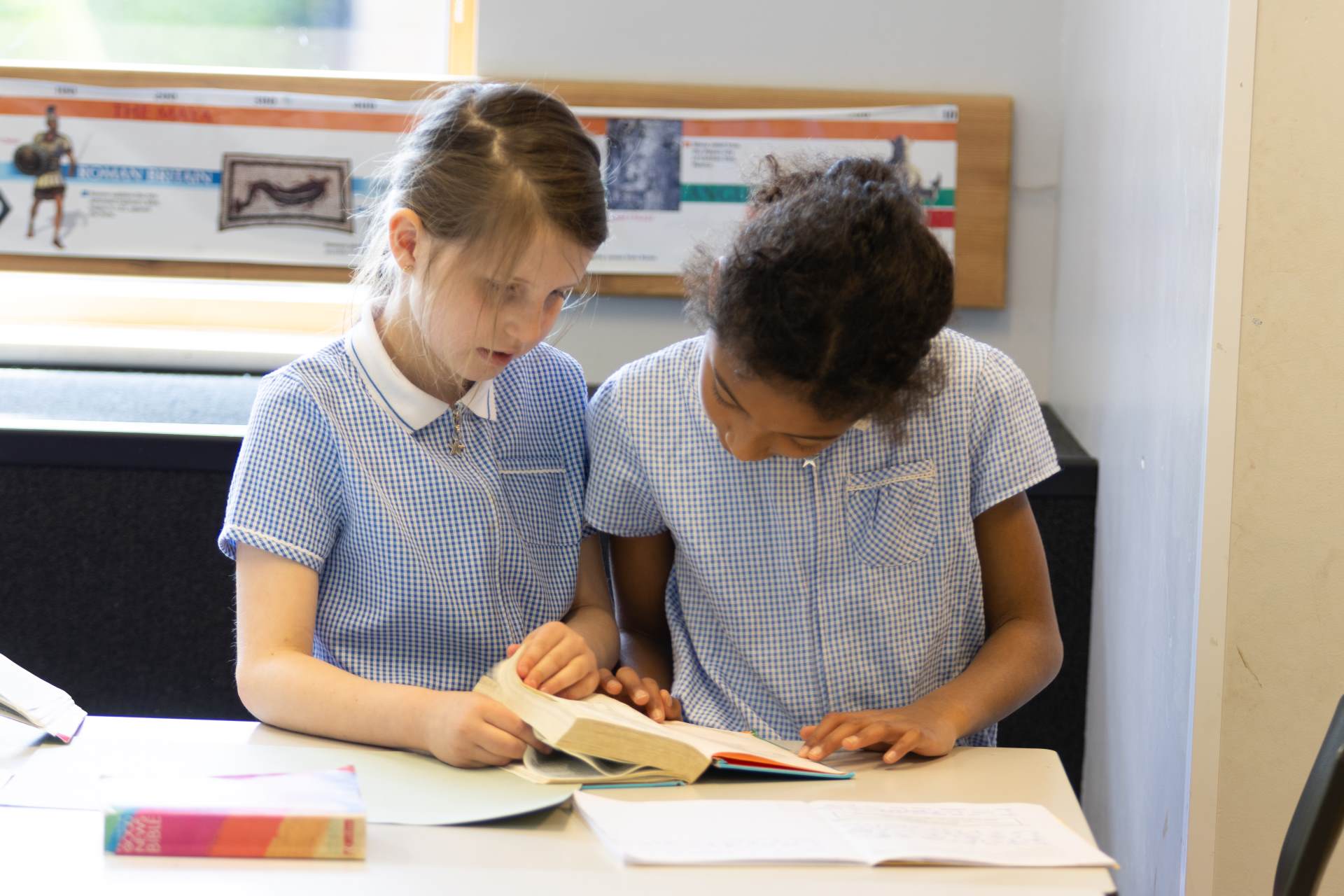
Tuesday 9 December 2025 6P Weekly Learning w/e 05/12/25 6P used Bibles to uncover differences in the infancy stories told in Luke and Matthew's gospels.
-
Monday 1 December 2025 Advent Liturgies This week we help our Advent Liturgies for all children. It was lovely to come together and light the first candle of our Advent Wreath.
-
Monday 1 December 2025 Advent Liturgies This week we help our Advent Liturgies for all children. It was lovely to come together and light the first candle of our Advent Wreath.
-
Friday 21 November 2025 RM Weekly Learning w/e 21/11/25 In RM this week in RE, we learned that Mary and Joseph travelled on a long journey from Galilee to Bethlehem. Afterwards, we drew maps to show their journey.
-
Friday 21 November 2025 3MG Weekly Learning w/e 21/11/25 In RE this week, we learnt about the prophet Isaiah and how he showed the people of Judah how important it was to follow God. We wrote letters pretending to be Isaiah to the King of Judah telling him about the important prophecy of Jesus being born.
-
Friday 14 November 2025 1P Weekly Learning w/e 14/11/25 Remembrance Day
-
Tuesday 11 November 2025 Remembrance Day